October 15, 2026·Blog
Interview with the RC Prize Winner 2025, Annika Borg
How did it feel to receive the Research Catalogue Prize?
Annika: When I made this exposition, I didn't know about the Prize at all. But when I became aware of it through the open call, I thought, why not? I could give it a try. So I was very surprised when it was shortlisted, and even more surprised when I heard that I had won.
I felt really honoured and extremely grateful. I think it was wonderful to be recognised and valued in that way, especially because I had not used the Research Catalogue before, nor been part of an artistic research programme or affiliated with any kind of institution since I graduated from the Trondheim Academy of Fine Art in 1996. I had developed this project as an independent artist, so it was huge for me.
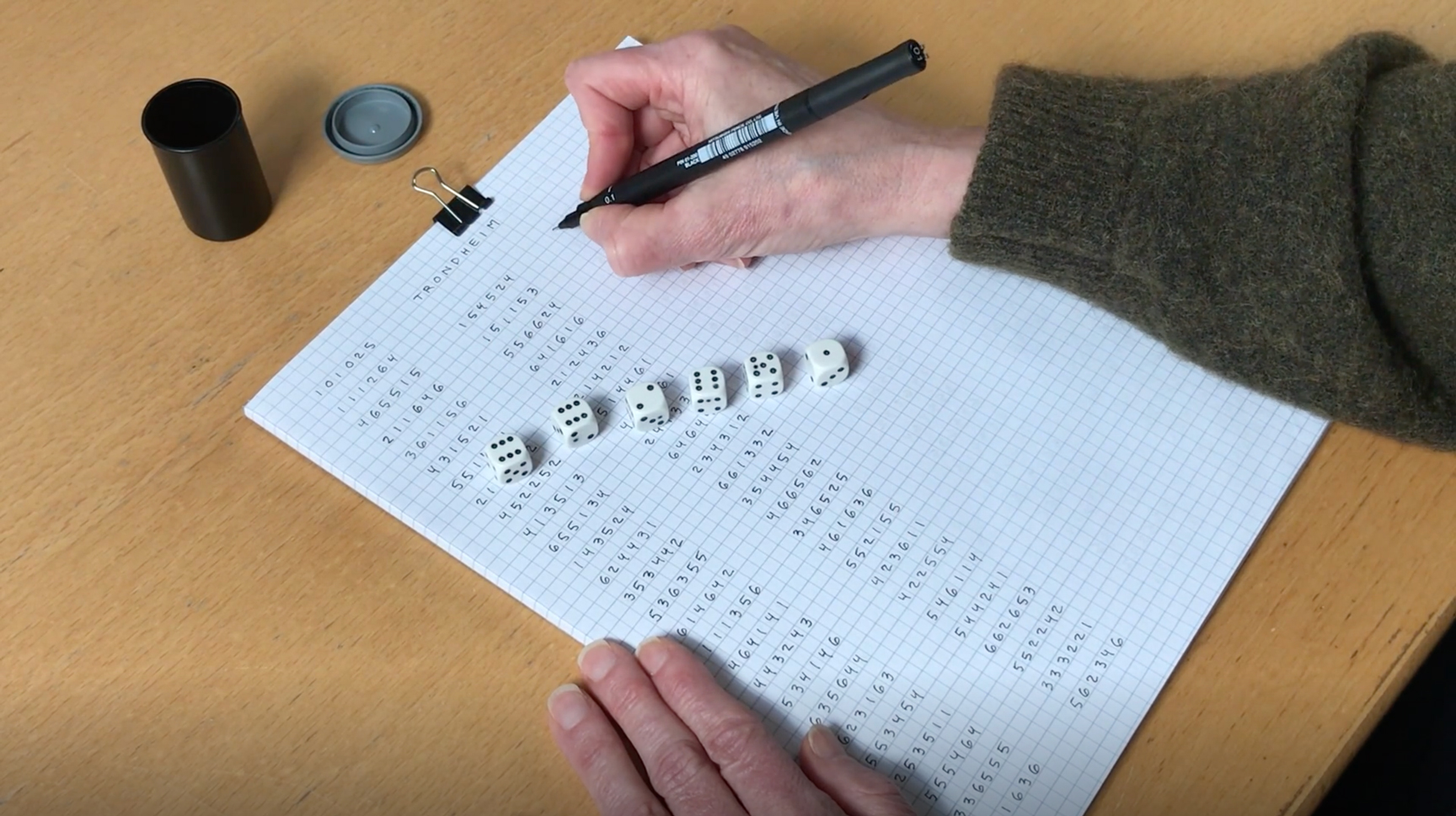
The project began in September 1994 with the daily action of rolling dice. Looking back over more than three decades, what does duration make possible for you that a shorter project might not? Also in relation to research methods?
Annika: Well, that’s a rather tricky question, as I haven't really thought of what I do in terms of research methods. I see it more as a necessity, a necessary method for my artistic practice. However, I think duration makes it possible to really immerse yourself in a project or process. It creates time and space to be open to whatever might arise, along with experiences, thoughts, questions and ideas. This perhaps presupposes that one has not set specific goals to try to achieve, or at least that one is open to the unexpected and allows the process and one's experiences to guide one forward. In my case, I work with both the long-term and the short-term. The dice-roll project is the long-term project, serving as an overarching base, while the transformations are the short-term projects, which are varied and more specific. I also like this intertwined quality, the way they influence each other.
You also describe the project as a reminder of your decision to live as an artist. Was there a specific event or feeling that sparked that for you? Has the meaning of that commitment changed over the years?
Annika: Not exactly. It was more the result of a longer process of figuring out what I wanted to do with my life. I'm curious by nature. I have interests that run in many different directions and spent nearly ten years after secondary school trying to work out what to commit to. So I tried a lot of different things, both through education and work. Gradually, I began to approach the idea of working freely with art and, in that context, being able to incorporate elements and ideas from the things that interested me.
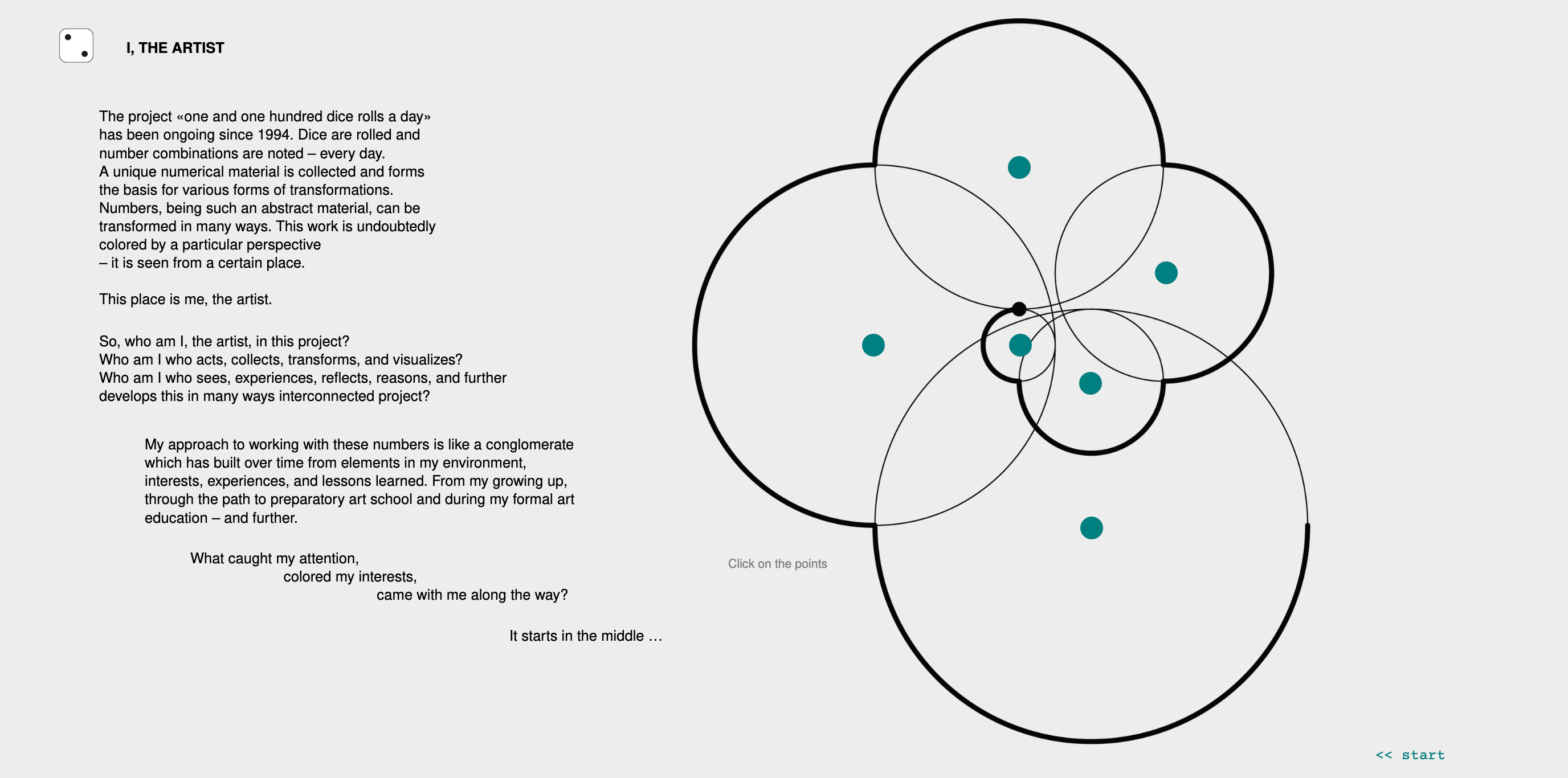
There is a section in the exposition that deals with this: my background and the path leading up to the project. It’s also linked to the “seen from a place” part of the Research Catalogue exposition. Working with numbers would probably look very different if another artist had worked with that base material.
In the beginning, it was something to focus on, to hold onto. I knew that a situation might arise that could, over time, distract me or cause me to lose touch with what I had decided should be important in my life: working with art. The meaning of commitment perhaps hasn't changed over the years, but I'm no longer afraid that something could distract me too much. I've been able to navigate the things that happen in life while continuing with the dice. The daily dice-roll project serves as an anchor.
Have there ever been days where you've thought "I really don't want to do it?"
Annika: Well, some days perhaps I’m tired or too much is happening, but I still do it and I still want to do it. It doesn't take a long time either, maybe between half an hour and an hour. When I do it, it's also a situation where I calm down and can be present in a nice way.
You treat randomness as something to enter into a dialog with. What has chance and randomness taught you? And how has that been different to making deliberate artistic decisions?
Annika: I think it has taught me to be curious about and open to the unpredictable, rather than seeing it as a mistake or a failure. Instead, I see it as an unexpected possibility, which I feel is a good thing. This approach has given me the possibility to go in directions I might not have thought of without the influence of chance.
Chance brings experiences that I cannot fully predict, which can lead me in unfamiliar directions. It's a bit difficult to describe, but it has something to do with being able to step outside what I might initially have envisaged.
Then you have the numerical material from rolling the dice and it becomes many different things like animations, drawings, texts and sculpture. Do you ever know if a transformation has revealed something new about the material?
Annika: I'm not sure I actually know that. Something new... Each technique has its own sensory qualities, like stillness, movement or rhythm and so on. Each has the possibility to give you a different entrance through which to experience the numerical material. I also like to think of my project as portraying a chance - that is, to show and present that. Not necessarily to reveal something entirely new, but perhaps rather uncovering something unseen.
That's interesting. Uncovering something unseen. How do you decide what the numerical information becomes?
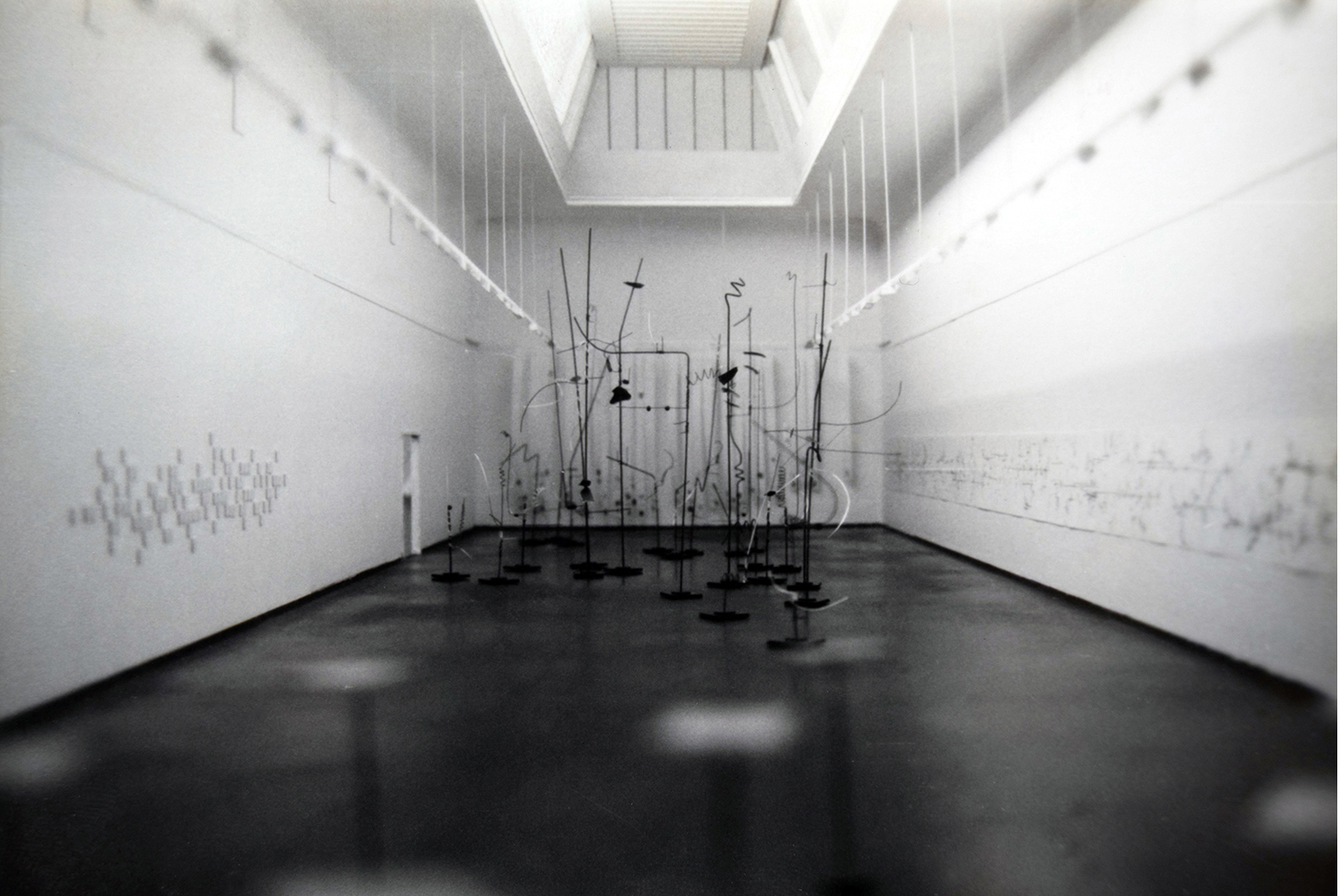
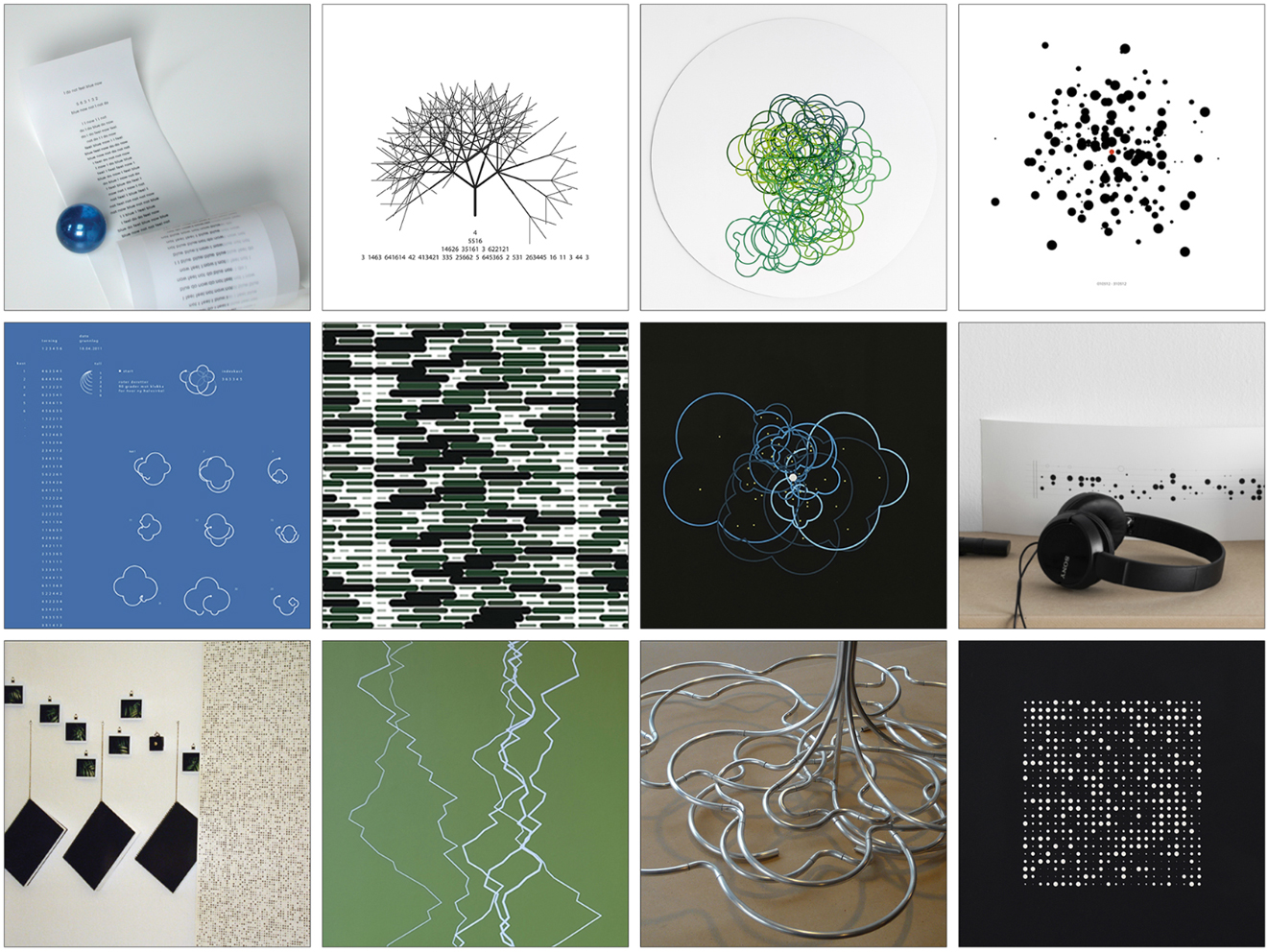
Annika: I started out with two-dimensional drawing. First with the dot as a sign form for the numbers, which was a reference back to the dots on the dice. Later, when I started thinking about the concept of time, I ’stretched’ the dot into a line and worked with that for a while. When I began bending the straight line into a semicircle, I had the experience that the expression became more organic in a way. I became curious about how it unfolded visually as a drawing on paper and how the line actually moved the drawing.
This became the idea behind my first animation. The animation then made me wonder how it would look as an unfolded visual expression if it wasn't moving, but I could walk around it instead. That led to the creation of a three-dimensional expression of it. It’s a sort of domino effect. The experiences and thoughts that emerge from the process lead me on to the next step.
Does that change your relationship with the dice when you see it then afterwards in all of these different expressions?
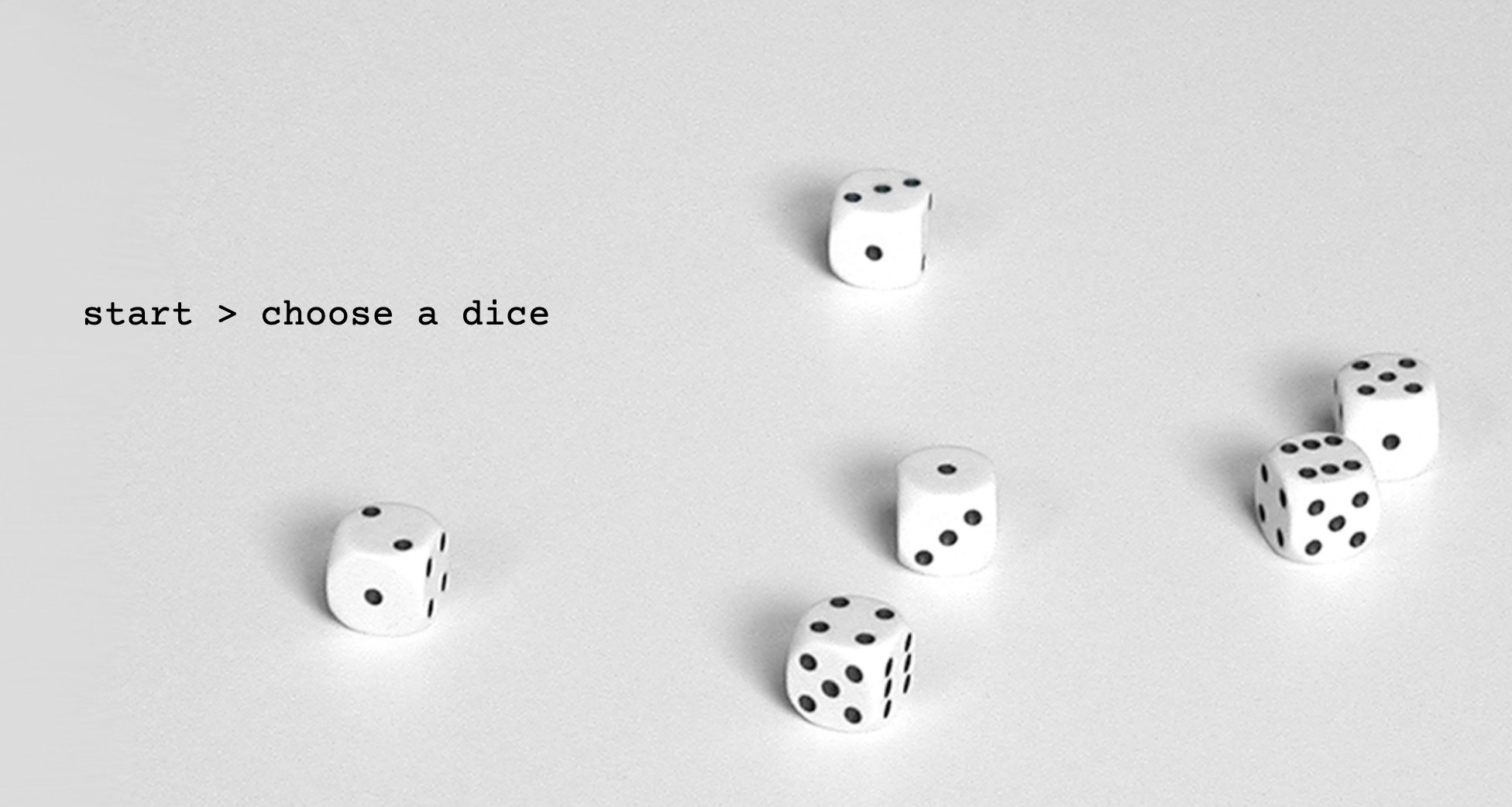
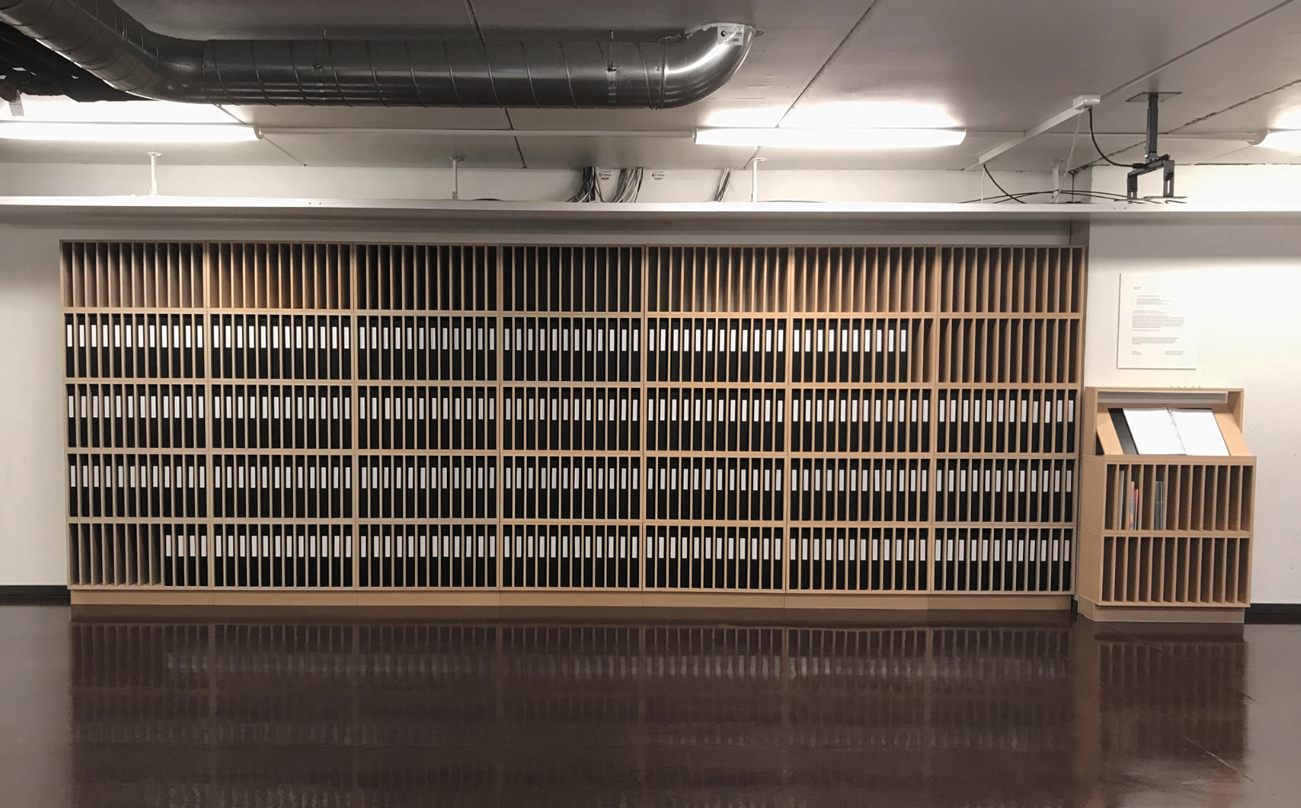
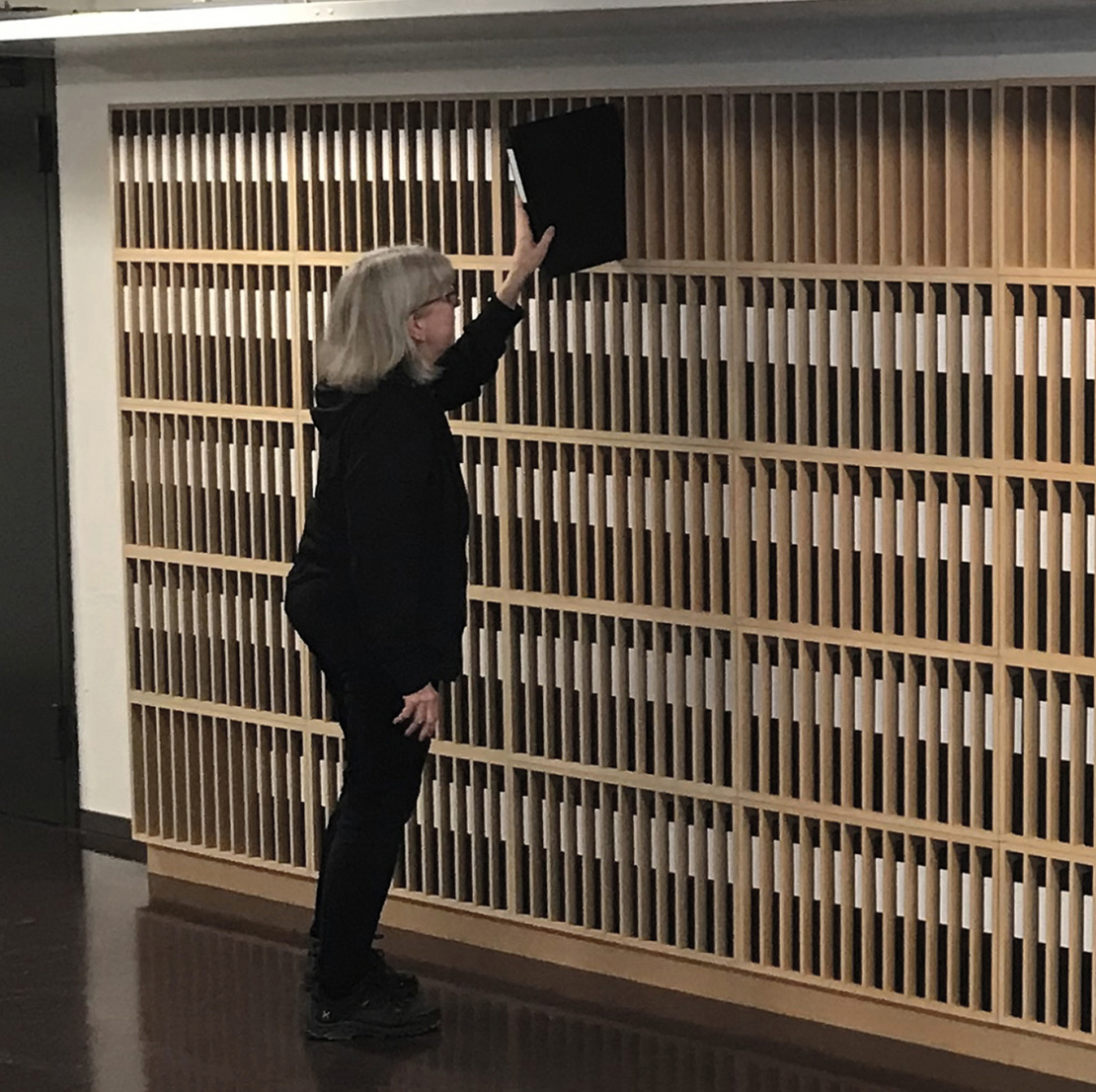
Annika: Maybe not with the dice themselves, but with what they represent: these enormous, a vast number of combinations that are almost endless. The number of possibilities is really huge. That has always fascinated me. The fact that I use six dice and roll them 101 times a day makes the variations so enormous. You cannot imagine it, and that is a really strange feeling. It is interesting to experience that feeling. Then there is also the time aspect and the archive, which keeps growing each day and year, getting bigger and bigger and bigger. Now it is something I live with! I'm at 385 binders. Also, today is the 11,700th day since the project started.
Have you ever rolled the same combination?
Annika: Yes, I must have. That is when it comes to the very first roll - the one that stands alone in this project. I also know when I get the same number on all six dice, or a Yahtzee. That happens once in a while. With some combinations, it is obviously easier to know that I have rolled them before than with others, such as 123456. But when it comes to rolling the next 100 times, getting blocks of 600 numbers and knowing whether I have rolled that combination before, that would be impossible. Because if just one number is different, the combination is, by definition, a new one.
Are they the same dice? Have you ever lost one? How do you continue the practice when you travel?
Annika: Yes, they are the same dice. When I'm not using them, I keep them in a small cylindrical plastic box that used to hold an analogue film roll. When I travel, I take this with me. I bring the box with the dice, an A4 grid paper and a pen, and that's all I need to keep the daily project going and make sure the dice don't get lost. I always carry them with me in my hand luggage and look after them in the same way I do with my mobile phone, passport and other important items. They don't take up much space, which is very handy.
Throughout the exposition you also write about developing sign forms, rules and methods. When did you begin to understand the practice in terms of artistic research, and did that understanding change the way you worked?
Annika: When I started this project, I don't even think the term artistic research had been established, or at least I didn't know about it. Early on, I thought of my practice as a kind of parallel to scientific research, but with an artist's approach. That is, a process that does not always follow facts, but often follows strange thoughts and loose associations.
When the artistic research programme was established, I felt, “This is quite close to my practice. This might be what I'm actually doing.” But it didn't change the way I worked, as my ongoing process was still evolving, and remained meaningful and interesting to me.
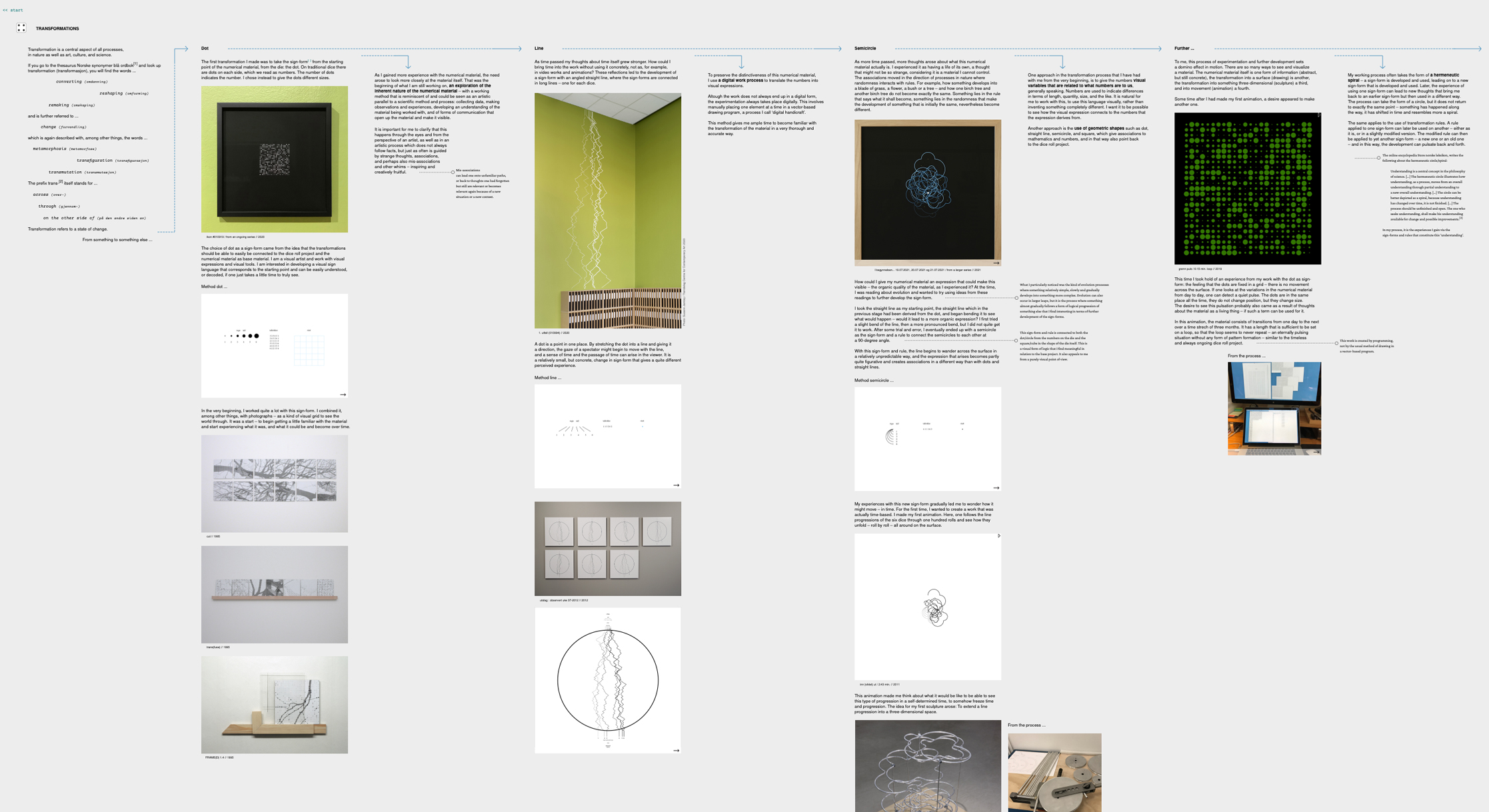
Your exposition in the Research Catalogue is structured, but it also invites the reader to navigate it in different ways. You also mentioned earlier that this was the first time you worked in the Research Catalogue. Did working in the Research Catalogue influence your practice because you were creating the exposition while still doing the daily dice rolling? And how did working in the Research Catalogue influence the presentation of the research?
Annika: It has directly influenced my practice, as the exposition came about as a result of an open call for the Nordic Journal for Artistic Research, and contributions had to be created in the Research Catalogue. The theme was The Heart of the Experiment (and the art of failure), and there were aspects of my practice related to this that I had not previously considered very thoroughly, and which needed to be reflected upon and articulated. I also had to learn how to use the Research Catalogue both as a tool and as an opportunity to present what I wanted to communicate. I looked at other artists’ expositions, took part in two webinars on the Research Catalogue, and, after gaining a basic understanding of its various functions and ways of presenting content, spent a lot of time working out the best approaches to the different aspects of what I wanted to communicate.
I thought the Research Catalogue turned out to be a really good platform for doing this. I felt I had found a voice that activated the nature of my project. For example, I had considered recording a video of myself rolling the dice, but I had never done it. Then I thought, this is the time to do it so I can include it in the exposition.
What did the Research Catalogue make possible for presenting the kind of work that you are doing that something like a static article could not? Were there things about the research that you could only communicate through the exposition format?
Annika: I have never written an article about my project before, so I don’t know how it might have turned out. But as a visual artist working with the visual domain in various ways, the visual is central to my practice. Being able to show time-based works, such as animation and sound, rather than simply writing about them is important. This is something the Research Catalogue facilitates well. Another aspect is the ability to let readers experience some of what I have experienced for themselves. For example, a lot of numbers can look like just a lot of numbers, but their visual transformation highlights the differences and makes each individual roll of the dice more distinctive. In the section of the exposition dealing with chance, variation and diversity, this experience is presented in the form of a slideshow.
Throughout the exposition you describe a process of observation, experimentation and transformation, iteration and reflection. You're very generous in how you make your process visible in the exposition. Was it important for you to make the process of this knowledge generation visible to the viewer? What do you hope other artistic researchers take away from that?
Annika: I have always been quite open about the process, and I believe it is important to show it. Both the main project and the smaller projects are about this openness. I am not interested in keeping the process hidden. I think that would only make it seem mysterious or as if it were nothing more than patterns. As for what I hope other artistic researchers might take away from it, I don’t know enough about how they present their work to say. I can only hope they will be inspired by it. I also don’t think it is dangerous to be really open about one’s process, because every artist has their own kind of fingerprint in what they do.
Although your work is built on carefully defined rules and systems, the exposition repeatedly speaks about dialog, surprise and discovery. Could you talk a bit more about that relationship and whether you feel like you are in conversation with something that has kind of its own agency, or if the dialog is more a way of describing what happens when you work within the system, and see what emerges?
Annika: It is connected to the core element of chance and the unpredictable. Perhaps we cannot say that chance has a kind of agency of its own, but I think it contributes something to the process that I cannot do myself. It is difficult to do something completely random. What I call a dialogue happens during the transformation process. I try a sign form, such as a dot, a line or a semicircle, and apply a set of rules to the numerical material to see how it responds. The response might lead me to make a slight change to either the sign form or the rule, and then I see what happens. Through this process, something eventually emerges that I find exciting and that might surprise me, because I could not have fully foreseen it. Working this way is like going on an expedition through the material and seeing what you discover along the way. I like this approach.
That's really nice. An expedition through the material. That's a great sentence.
Annika: Yes, that’s what makes this so interesting. I don't know where it leads me.
After 30 years of doing practice, what surprises you the most about the material?
Annika: There isn’t anything specific that directly surprises me. I have lived with this process and material for such a long time. But I do notice that it remains both unpredictable and fruitful in terms of further development. It continues to inspire me to carry on with my work, and I am happy that the project as a whole is as flexible as I had hoped it would be.
What does the future hold for the project now?
Annika: I have recently started working on an art commission for the new, unified campus at NTNU, the Norwegian University of Science and Technology, in Trondheim. The commission is based on my ongoing long-term dice project. The aim is to install the archive, a large installation of folders containing the numerical material, in one of the new buildings. I will also create some new transformations specifically for that situation and environment. The project itself will, of course, continue for many years after the commission is completed, which will be around 2030 or 2031. I will continue adding a new folder to the installation every month for as long as I am able, and the archive will keep growing. The building is planned for the humanities and social sciences in the part of the university that already houses technology and the natural sciences, so my work will create a nice link between these disciplines.
Have you discovered any other links yourself while working on the project?
Annika: These connections have been there from the very beginning. I have always been interested in mathematics, language, philosophy, physics, chemistry, and all those fields. That interest has been with me throughout the project.
Do you have any advice for other artistic researchers who are trying to develop long-term research projects?
Annika: Develop something that has a degree of openness, combined with something you will still find interesting after a long time. Think about the many different possible aspects of your practice, and make sure the project is flexible enough for you to live with it over many years. Be patient and curious about what happens along the way.